русский
 عربى



A boiler house, a compressor room, and a chemical reactor bay have one thing in common. Each contains equipment built to hold pressure, and each needs protection if that pressure climbs past its design limit. A Spring Loaded Safety Valve provides this protection mechanically. A spring holds the valve shut during normal operation, and the valve opens when pressure reaches its set value. As pressure falls, the spring pushes the valve back toward the seat. An Industrial Safety Valve of this type depends on set pressure, discharge capacity, reseating behavior, seat sealing, materials, and regular calibration, so each of these deserves attention during selection and upkeep.
A Spring Loaded Safety Valve protects pressurized equipment from excessive pressure. It normally stays closed. A spring presses the disc against the seat, while pressure from the medium pushes in the opposite direction. Within the normal operating range, the spring force wins.
When pressure rises to the opening point, the medium overcomes the spring's closing force. The valve opens and releases part of the medium through the outlet, which lowers pressure in the protected equipment. Once pressure drops into the closing range, the spring returns the disc to the seat and limits further release.
No operator has to notice the problem and react. The mechanism responds directly to the pressure acting on it. Internal design still varies with medium, pressure range, temperature, and installation, so valves that look alike from outside may behave differently.
Spring condition matters throughout. Corrosion, fatigue, wear, or poor adjustment can change the closing force, and the valve then responds differently from its rating.
Set pressure is the pressure at which the valve is designed to begin opening under defined conditions. It decides when relief occurs, so it must agree with the permitted conditions of the protected equipment.
A boiler safety valve is chosen according to the boiler design and applicable rules. A pressure vessel valve must match the vessel's permitted pressure and how the vessel is used. Engineers consider normal operating pressure, possible pressure rises, connected piping, and safety requirements together, since set pressure cannot be chosen in isolation.
Spring preload sets the opening force. Changing the adjustment without proper testing alters opening and closing behavior, so verification belongs to a qualified technician or authorized service provider using a suitable test arrangement. When ordering replacements or arranging OEM supply, confirm that the set pressure on the documents matches the equipment specification.
Opening is only part of protection. The valve must also release enough medium to control the pressure rise.
A boiler may generate steam faster than the connected system can use it. A compressed air system may see pressure climb if supply continues while downstream demand drops or a control fails. A reactor may face gas, vapor, or liquid release, each behaving differently during discharge.
Several factors affect the capacity needed:
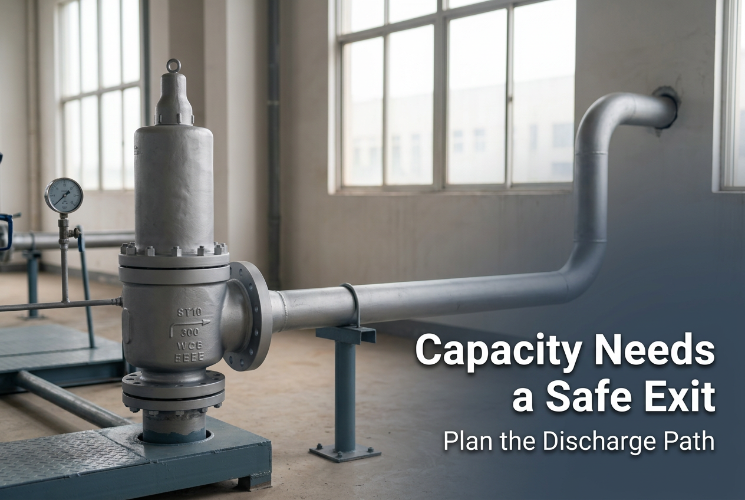
A valve with the right set pressure can still be unsuitable if its capacity falls short. The outlet matters as well. Discharged medium needs a safe path away from the valve, and poorly planned piping adds resistance or creates new hazards. Installation should follow manufacturer instructions and engineering requirements.
After relief, the valve should close again. Reseating pressure is the pressure at which this happens, and it is generally lower than the opening pressure. That gap lets the valve discharge before returning to its closed position. Without suitable behavior, a valve can open and close repeatedly near the set point, a condition that wears the seat and may cause leakage or interrupt the process.
Reseating depends on design, medium, pressure conditions, and flow during discharge. Buyers should review closing requirements as carefully as set pressure. Operating pressure that regularly approaches the opening point invites unwanted discharge, so the operating range and controls deserve review before selection.
The seat and disc form the seal that keeps the valve closed below the set point. Leakage causes product loss, energy waste, process instability, and unwanted exposure to the medium. In steam and compressed air systems, a weeping valve adds operating cost that goes unnoticed for months.
Surface damage, corrosion, contamination, and trapped particles all prevent proper contact. Misaligned stems or guides can stop the disc from returning to the right position. Material choice should reflect the environment, since corrosive media and repeated opening affect internal parts differently from clean air service.
Appearance reveals nothing about seat condition. Inspection and testing are needed, and any leakage cause should be identified before choosing cleaning, repair, adjustment, or replacement.
Spring loaded designs offer automatic relief without a separate operator command. Suitability still depends on equipment, medium, conditions, and safety requirements.
An Industrial Safety Valve should never be chosen by appearance or general category. It must match the specific equipment and the risks of its operation.
Automatic operation does not remove the need for inspection. Internal parts face pressure, temperature swings, and the medium itself, all of which affect springs, moving parts, and seats.
Calibration checks that the valve operates according to specified pressure requirements. It may cover the opening point, reseating behavior, and leakage, with the method depending on design and applicable procedures. Qualified personnel with suitable equipment should do it, because improper adjustment can leave the system without the intended protection.
A maintenance plan should cover:
The calibration cycle should follow regulations, equipment requirements, manufacturer guidance, and operating conditions, not an assumed fixed interval. A valve that has discharged may need inspection before returning to service. The cause of the pressure rise also needs investigation, since repeated discharge can point to a fault in equipment, controls, or process conditions.
A supplier needs enough information to judge whether a proposed valve fits the application. Useful details include the medium, equipment category, operating pressure, required set pressure, temperature, connection details, and applicable standards. State whether the valve is for a new installation, a replacement, or a customized assembly.
Clear documentation helps buyers review a proposal. Drawings, material information, specifications, installation instructions, and test records should be available. Ask about quality control for the spring assembly, seat, internal movement, and pressure performance. For OEM projects, review any change to connections, materials, internal structure, or operating requirements before production, since such changes can alter performance.
| Area | Information to Confirm |
|---|---|
| Application | Equipment type and operating purpose |
| Medium compatibility | Material suitability for the process medium |
| Pressure | Set pressure and expected operating conditions |
| Discharge capacity | Ability to meet relief needs |
| Sealing | Seat design and leakage requirements |
| Documentation | Drawings, specifications, test records |
| Compliance | Standards and certification |
| After-sales | Calibration, maintenance, replacement guidance |
Dependable pressure relief comes from matching the valve to the equipment. Set pressure, discharge capacity, reseating behavior, seat sealing, and materials should be confirmed together, and calibration should be planned from the start.
Buyers, equipment designers, and manufacturers should agree on function, connection arrangement, pressure requirements, and maintenance responsibilities before a Spring Loaded Safety Valve enters service as part of any Industrial Safety Valve installation.