русский
 عربى



Before a technician opens a flange or swaps an instrument, the work area has to be cut off from the process fluid. With flammable, toxic, corrosive, or pressurized media, a leak past one closed valve can injure people and damage equipment. Plant crews know this from routine shutdowns, when a valve that "looks closed" still needs proof that it holds.
A double block ball valve places two sealing barriers in one assembly. Many designs also provide a connection to the space between them, so pressure can be checked or released under an approved procedure. Oil and gas sites, LNG projects, petrochemical plants, offshore platforms, and tank farms use this arrangement. Its value depends on seat condition, pressure, installation, controls, and the isolation procedure.
Pipelines often stay connected to live equipment while one section is serviced. Closing a single valve stops normal flow, yet leakage, trapped pressure, or a wrong operating sequence can still reach the work area. Planners therefore ask what happens if the main barrier does not hold.
The medium and the setting shape the consequences. A leak of harmless service water means cleanup. A release of toxic gas or flammable liquid can trigger an emergency response, and on an offshore deck or in a crowded plant, escape routes are short.
Typical isolation goals include:
A pressure ball valve may suit many pipeline duties. Its isolation ability still depends on its design, rating, sealing arrangement, and operating conditions. Closing a valve does not by itself make the downstream section safe.
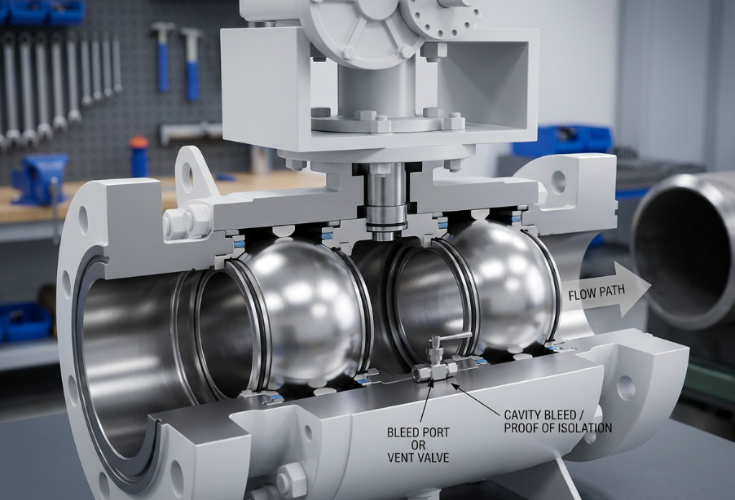
Each sealing barrier restricts flow across the valve. Two barriers give an added layer compared with a single seal, provided the valve suits the service and is installed and operated correctly. Internal layouts vary. Some use two seats around one ball, while others use separate closure elements, so the manufacturer's drawings should be consulted.
| Valve Feature | Isolation Role |
|---|---|
| First sealing barrier | Restricts flow from one side |
| Second sealing barrier | Adds a further isolation point |
| Intermediate cavity | Allows leakage checks or pressure management where designed |
| Vent or drain connection | Supports controlled release under approved procedures |
| Operating mechanism | Moves the valve to the required position |
Two barriers do not make leakage impossible. Seat damage, debris, unsuitable pressure conditions, or poor installation can all affect sealing. Terminology also needs care. Double block and bleed normally means two barriers plus a means of venting the space between them, but accepted wording depends on the standard and valve design. Purchase documents should state the required functions plainly.
Maintenance may involve opening a line, removing an instrument, or replacing a component. The isolated section must be protected from process fluid and from stored energy.
If the intermediate cavity has a connection, crews can check it for leakage before work begins. A pressure rise or fluid appearing there suggests a barrier is not holding. The response should follow site safety procedures, not rely on the closed position alone.
A practical sequence looks like this:
The valve is one element of an isolation strategy. It does not replace risk assessment, lockout, or pressure verification. Hazardous fluid can stay trapped in a section even after a valve closes.
The seats form the seal around the ball. Damaged, contaminated, or unsuitable seats weaken the isolation function. Seat material must suit the fluid, since chemical makeup, temperature, cleanliness, and particles in the stream all affect sealing over time.
Cavity pressure needs attention as well. Some valves use self-relieving seats that let cavity pressure move toward a designated side. Others use different pressure-management methods, so behavior depends on construction.
| Consideration | Why It Matters |
|---|---|
| Seat material | Must suit the fluid and environment |
| Pressure rating | Must match pipeline conditions |
| Temperature range | Affects material behavior and sealing |
| Flow direction | May influence seat operation |
| Cavity pressure | Must be managed per valve design |
| Leakage requirement | Should be defined for the isolation duty |
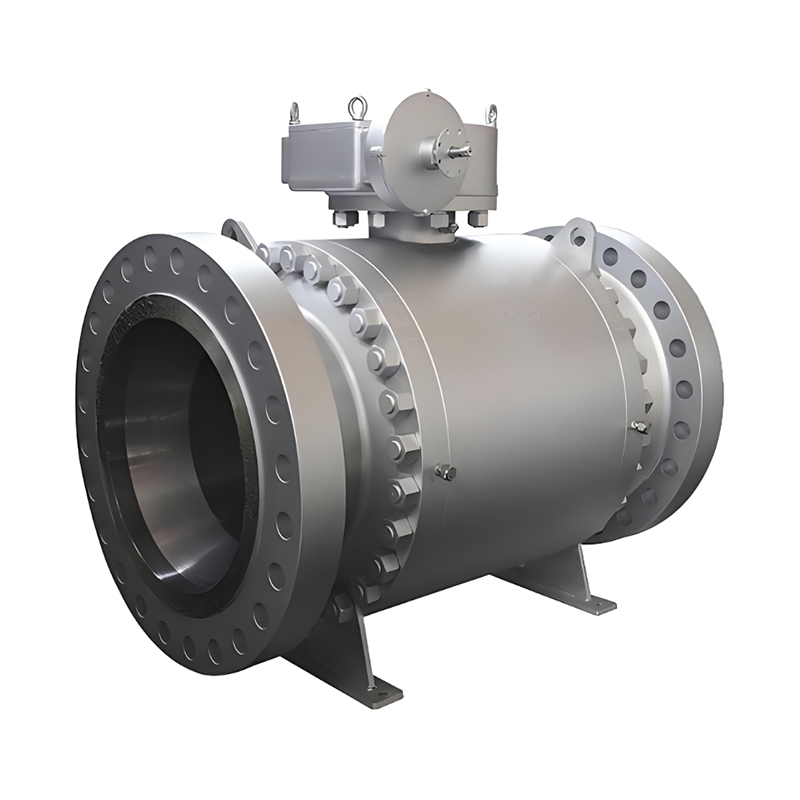
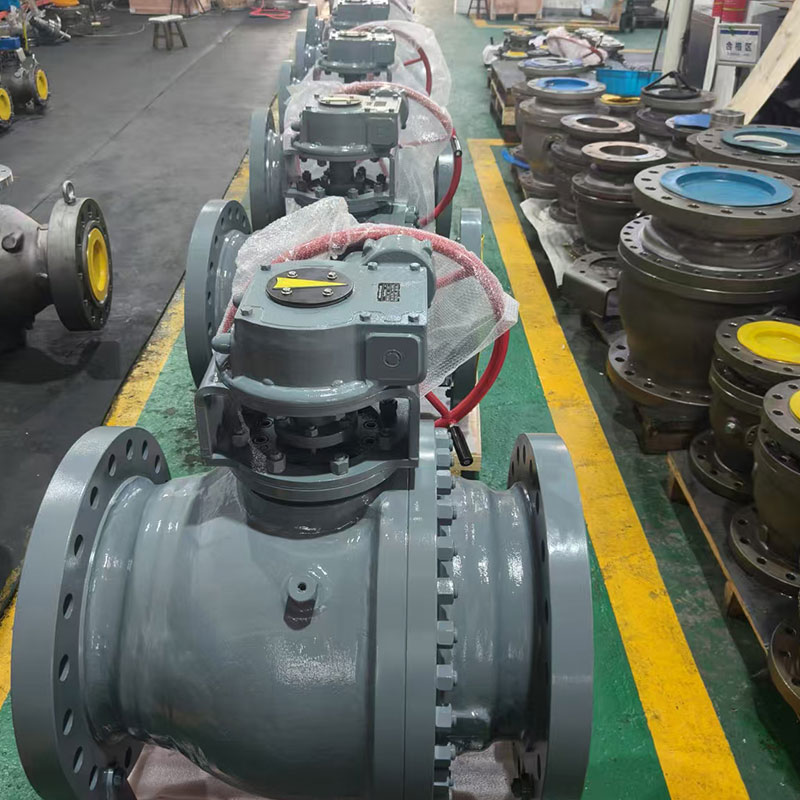
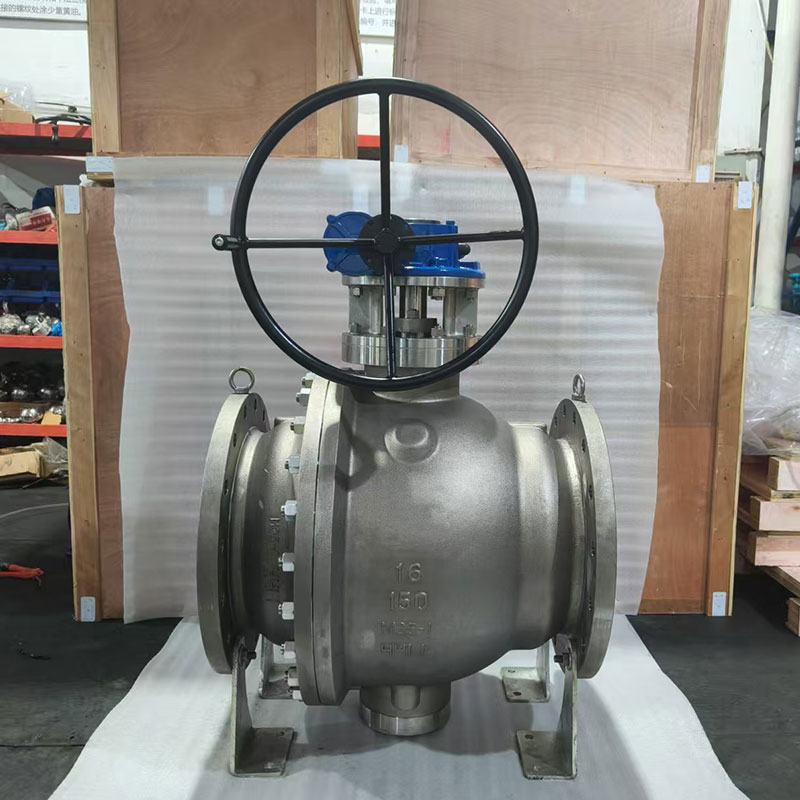
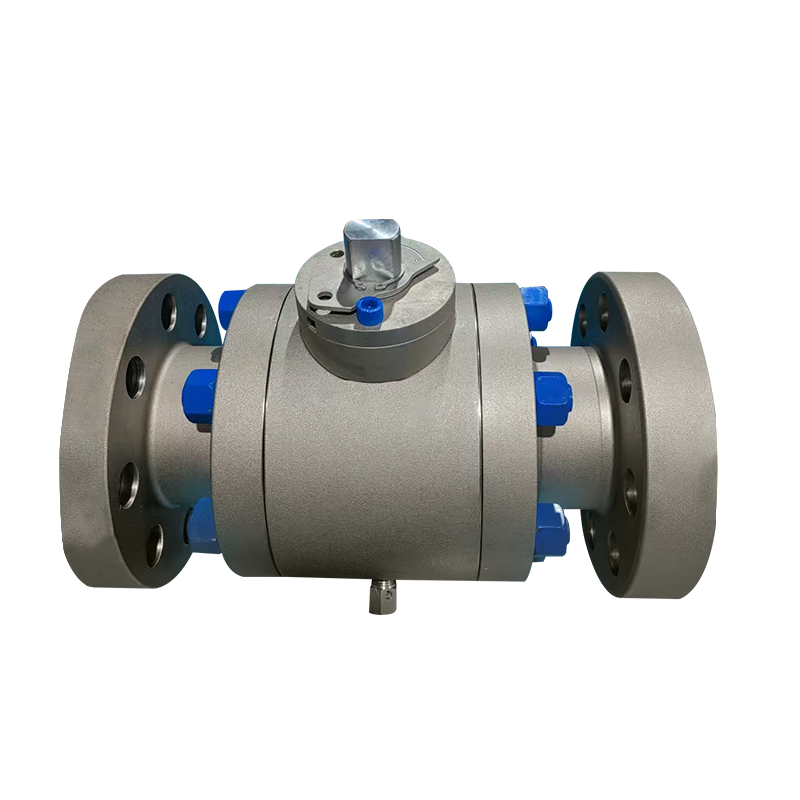
A trunnion type ball valve supports the ball with a fixed mounting arrangement, so the seats do not carry all the ball's load. This suits some larger or higher-pressure services. The name alone does not show that a valve offers double block and bleed function, so buyers should review the internal design and stated isolation capability.
Oil and gas lines run under demanding conditions, and pumps, compressors, and metering skids need to be separated from live process lines for servicing. LNG adds low-temperature concerns, so a valve rated for general hydrocarbon service should not be assumed suitable for cryogenic duty.
Petrochemical plants handle liquids and gases that may be corrosive, toxic, or flammable. Offshore platforms and tank farms add limited space and neighboring equipment. Clear isolation checks help crews work within these constraints.
Engineers usually weigh:
No single valve type suits every line, and hazardous services call for technical review.
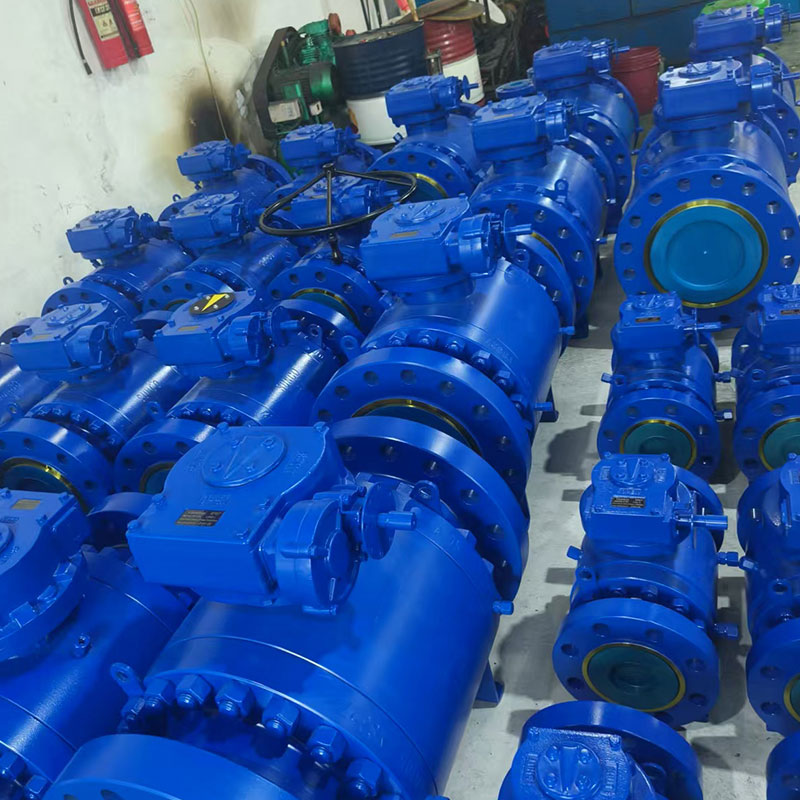
Manual handwheels work for some installations. Others use pneumatic, electric, or hydraulic actuators, chosen by valve size, site conditions, and the need for remote operation.
An actuator lets operators work from a safe distance and connect to a control system. Automation alone does not prove safe isolation, though. A control signal can show "closed" while a mechanical or sealing fault remains. Position feedback, testing, and independent checks may be needed before work is authorized.
Actuator selection should consider power source, environment, feedback signals, manual override for emergencies, and access for upkeep. Fire-safe design follows a defined test standard, but it is a separate requirement from double isolation, cavity pressure management, or actuator behavior. Each should be assessed on its own.
Specifications should state the isolation arrangement directly: double block only, double block and bleed, or a double isolation and relief design. These terms describe different behavior.
Supplier review can cover:
OEM customization may help with special connections, materials, or installation limits, and it should be reviewed against performance requirements. Export projects often need records for inspection, shipment, and acceptance, so these should be agreed before production. Engineering and safety staff should join the review for hazardous services.
Wear, corrosion, debris, and changing conditions can degrade sealing during service. Routine inspections catch problems before the valve is needed. Crews check external condition, visible leakage, operating feel, actuator function, and connections, and qualified personnel review anything unusual.
A functional operating check differs from a formal seat leakage test, and neither confirms every part of the isolation system. Maintenance records of leaks, repairs, and tests help engineers decide on further work and support spare-part and replacement decisions. When inspection and procedures match the valve's intended function, a double block ball valve remains a dependable part of the isolation plan.